SECTION 1 OF 100
Chapter 1
Opening the book…
Your reading place is remembered on this device.

JANE AUSTEN
A familiar world.
More ways to lose yourself in it.
The whole novel, in 100 shorter sections. Beautifully presented, with illustrations and occasional notes.
Begin reading 02Understand themes. Explore theories. Compare, question, test your understanding, and summarize.
Follow your curiosity 03Longed-for perspectives. Events untold. Futures imagined. The novel’s spirit and style held close.
Imagine beyond the page 04Contribute a thought, offer feedback, or suggest a change. Help this edition grow with its readers.
Join the conversationSECTION 1 OF 100
Opening the book…
Your reading place is remembered on this device.
A CLOSER READING
There is always something else to notice.
BEYOND THE PAGE
For the scenes you wish you could have read.

Another perspective. A conversation left unheard. A life after the last page.
Newly imagined writing, guided by the novel’s characters, world, and understated style.
Imagined futures use the ending. Choose “The whole book” when you are ready.
Every piece is identified as imagined writing. Read the boundaries.
A BOOK SHARED
The edition grows through its readers.
A thought about the novel. A reading you would like to explore. Something an answer missed.
Send it to the edition’s editorial queue. Contributions are considered before they become part of the edition.
Submissions are private. They do not appear publicly or change the book automatically.
OUR EDITORIAL COMMITMENT
Read closely. Think freely. Imagine faithfully.
This edition begins with Jane Austen’s words. The original novel remains unchanged; its 100 shorter reading sections, illustrations, and occasional notes offer new ways to spend time with it. Each of the 50 chapters is divided at a paragraph break, without abridging or rewriting the text.
Our editorial aim is to preserve Austen’s wit, emotional subtlety, and social complexity: the distinction between feeling and its expression, between what someone says and what they know, between a persuasive interpretation and an established fact.
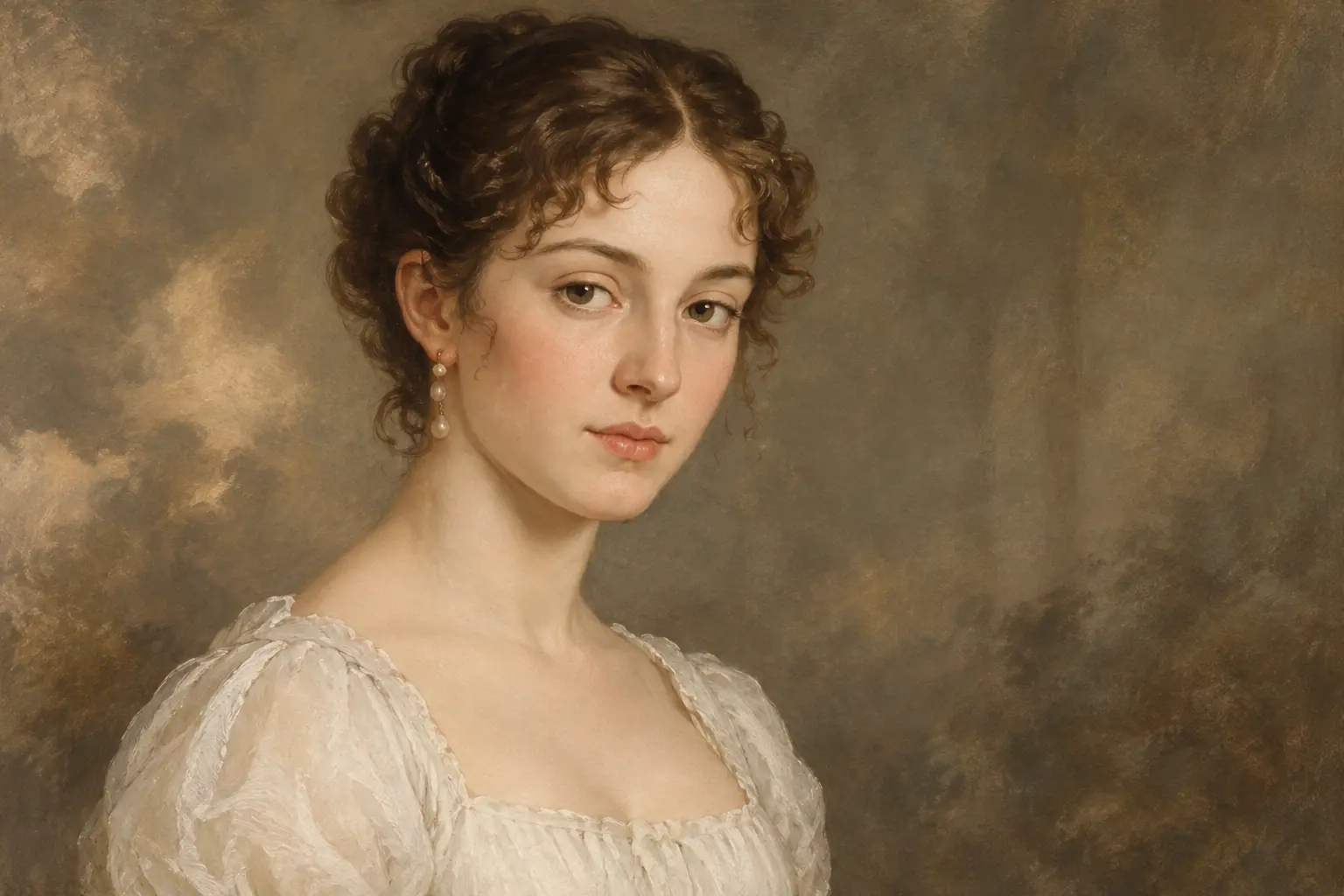
Study brings general intelligence to the text: its evidence comes from the novel, its interpretations can go beyond what Austen states, and its quotations must be exact. Expand creates new scenes, perspectives, and futures that preserve the work’s style and established circumstances, always identified as imagined writing. Illustrations are artistic interpretations; notes are editorial additions. Community contributions can inform future revisions through editorial consideration.
This is an independent edition. Its generated responses receive automated checks; those checks do not guarantee accuracy or replace human judgment. If something feels wrong, please tell us.
The text is drawn from the edition’s retained Project Gutenberg eBook #161 snapshot. The supplied source’s wording and paragraph sequence are preserved. Read the complete source at Project Gutenberg (contains the whole novel).
No endorsement by Project Gutenberg or the Austen estate is implied.
Editorial guidance · Imagined-writing profile · Source record
PROJECTION BOUNDARIES
Each experience has a clear relationship to Austen’s novel.
Austen’s original text, complete and in order. Illustrations and explanatory notes remain distinct from her words.
The novel supplies the data; general intelligence supplies the interpretation. Explore theories, test arguments, compare, contrast, or reason through a hypothetical. An answer can reach conclusions Austen never states, provided its reasoning is defensible and its claims about the novel are accurate. Quotations reproduce the retained text exactly. Open the supporting passages whenever you wish. A character’s account is not automatically the narrator’s truth; an inference is not a fact. Theories are possible readings to examine, not conclusions the book is made to endorse. Other books, adaptations, biography, and outside scholarship are not sources for this edition’s answers.
Other perspectives, untold moments, and possible futures are newly imagined work, never presented as Austen’s writing or established events. New dialogue, feelings, circumstances, and events may fill the spaces Austen leaves open; they need not already appear in the book. They must remain consistent with established events, characters, relationships, and chronology, and aim to preserve Austen’s style and intent. The edition checks selected source passages and a broader context within your reading boundary; this cannot guarantee perfect fidelity. A future is one possibility, not the novel’s secret ending. Generated work does not alter the original.
Study and Expand use the last completed chapter you select. For a partly read chapter, select the preceding chapter. Imagined futures use the whole book and require that choice explicitly. Reading in Immerse lets you open any section.
BOUNDED GENERATIVITY
A beloved book can invite more reading than its pages contain.
Questions that linger. Another character’s view. A conversation we wish we had overheard. Bounded generativity is the philosophy behind exploring those possibilities within an editorial commitment to the work.
The original remains available and intact. Interpretation stays distinguishable from evidence, and invention from the author’s words. The purpose is to make room for curiosity while keeping a reader oriented: what belongs to the novel, what is a reading of it, and what has been newly imagined.
An edition can evolve through thoughtful additions and reader feedback while retaining its source and identity. Its boundaries give that growth direction.
Discover Bounded Editions ↗